Residential
Smart Switchboard vs Traditional Switchboard: What Is the Real Difference?
A straight comparison between traditional switchboards and smart switchboards for buyers upgrading existing homes or planning new interiors.
Where traditional boards still work
Traditional switchboards remain familiar, simple, and widely available. If a home only needs manual switching, they can still do the job.
But they stop at basic control. There is no app layer, no automation, no room-level intelligence, and usually no premium design story.
Traditional switchboards work well when your only goal is manual switching for lights, fans, and sockets.
- Straightforward daily use
- Low upfront cost
- Familiar operation for every user
- Easy availability in the market
Where a traditional switchboard falls short
The weakness of a traditional switchboard is that it does not evolve with the way modern homes are used.
- You cannot control loads remotely
- You cannot create schedules
- You cannot track usage patterns
- You cannot combine design aesthetics with smart functionality
- You cannot add room-level automation through one central control surface
What makes a smart switchboard different
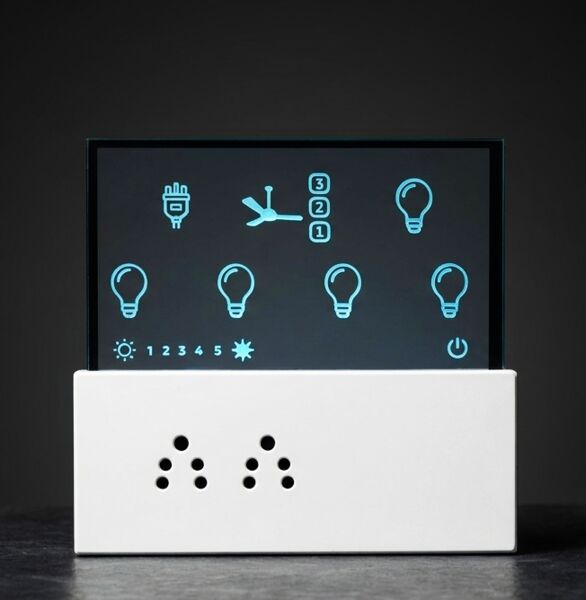
A smart switchboard keeps the wall-based control people are used to, but adds features that improve convenience and flexibility.
You can see that difference more clearly by comparing the NoColour One Touch product page with the room-specific options on the product variants page.
- Touch-based wall controls
- Smartphone app control
- Fan speed and room-level control
- Scheduling and automation
- Energy monitoring or alerts
- Offline local control
- A more premium visual finish
Day-to-day convenience
This is where the difference becomes obvious. With a traditional switchboard, control only happens when you are physically at the wall. With a smart switchboard, you may still use the wall every day, but you also gain flexibility for moments when you want faster, easier, or remote access.
- Turning off room lights after leaving the room
- Scheduling repeated actions
- Managing lights and fans from one app interface
- Controlling selected functions even when you are not standing next to the wall
Design and aesthetics
Traditional switchboards are usually chosen for function first. Smart switchboards, especially glass touch models, are often chosen for both function and appearance.
This matters because switchboards are visible on every wall. In modern bedrooms, living rooms, and premium apartments, a cleaner and more intentional switchboard design can improve the overall look of the space.
Installation considerations
Many homeowners assume a smart switchboard automatically means complex installation. That is not always true.
The more useful comparison is that a traditional switchboard is simple because it is familiar, while a smart switchboard can also be practical if it is designed for standard Indian layouts and existing homes.
That is why product pages should always connect readers to the installation guide and to a direct contact the team option.
- Will it fit my existing switchboard cutout?
- Will it require major rewiring?
- Is it designed for Indian room requirements?
- Can it handle lights, fans, sockets, and AC use cases appropriately?
Long-term value
A traditional switchboard may cost less upfront, but it gives you only one layer of value: manual switching.
A smart switchboard may deliver value across convenience, interior appeal, app-based control, scheduling, and more informed energy use in supported setups.
- Better everyday convenience
- Improved room experience
- Premium interior appeal
- App-based control and scheduling
- More informed energy use in supported setups
Which one is right for you?
Choose a traditional switchboard if you only want basic manual switching, design is not a major priority, and you do not need app control or automation.
Choose a smart switchboard if you want better control of lights and fans, value app access and routines, care about modern interior aesthetics, and want a future-ready upgrade for daily living.
Final takeaway
A traditional switchboard is functional. A smart switchboard is functional plus responsive, connected, design-aware, and more aligned with how modern rooms are used.
Continue Exploring